

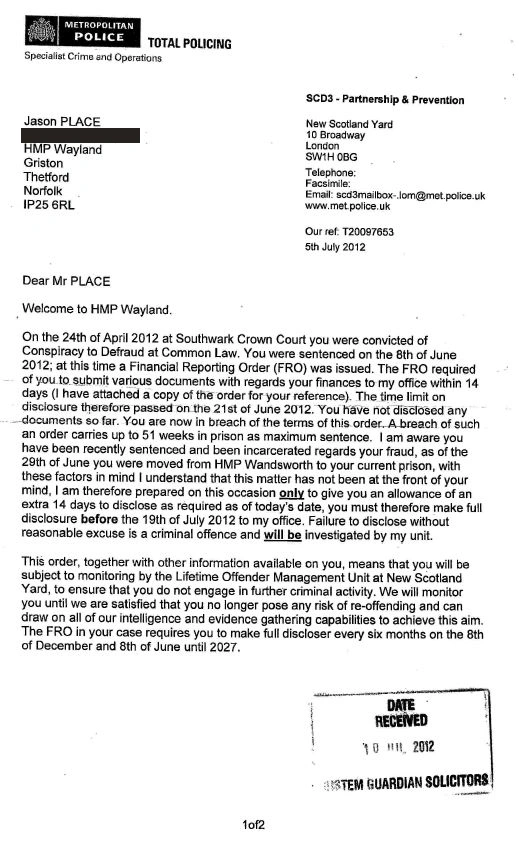
Six days after Jason Place arrived at HMP Wayland, a detective inspector wrote to welcome him. The greeting lasted one sentence. A financial disclosure was overdue, DI Karl Amos told him. He had another fortnight to supply it. On the second page Amos set out what officers might do while Place was in custody, from monitoring his calls to asking for him to be moved to another prison.
Place, who later used the name Jason Juul, kept the letter. His solicitors’ written objection to its tone survives alongside it. Over the following decade his name appeared on orders from three Crown Courts. The things he had to account for were often ordinary possessions: a laptop, an email account, a domain name. For a man who earned his living by building websites, they were also the tools of his trade. Juul believes the orders gave officials a way to stop him publishing criticism. To follow that allegation back to its beginnings means going further back than Wayland.
The name in the meeting note
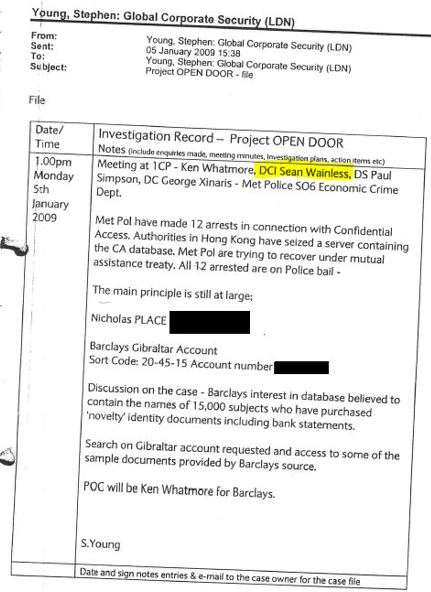
At one o’clock on 5 January 2009, Stephen Young recorded a meeting about the Confidential Access database. His Project OPEN DOOR note names a Barclays contact, Ken Whatmore, and lists DS Paul Simpson, DC George Xinaris and “DCI Sean Wainless”. The discussion included a request to see sample documents. Three years later, in an application published by Caxess Corporation on UK Indymedia, the defence said the schedule of unused material disclosed no meeting between Xinaris and Young.
Confidential Access had already been mentioned in Parliament. In May 2007 Mr Willis asked whether the Home Office sponsored or funded the website. Joan Ryan replied, “The site in question is not sponsored or funded by the Home Office.” That written answer in Hansard settled what the department said about funding. The claim about who used the site came from the later publication. That publication also cited the BBC’s Fraud expert examines fake ID. A 2011 archive capture survives. We could verify the title but could not verify the full report or play the footage.
The spelling in Young’s note mattered. In May 2014, Michele Cunningham told Juul she and the intelligence unit had searched for a DCI Sean Wainless and found no trace. By December, Trading Standards had forwarded her enquiry to a Sean Wanless. She was still waiting for a reply. She also reported that Xinaris had resigned and would finish on 9 January 2015. Juul says every officer eventually left. The correspondence supplies one leaving date and no reason for the resignation. It leaves the identity of the man at the meeting open.
Cover illustration. The signed orders give the dates, courts and terms. On conviction on indictment, a breach can carry up to five years in prison.