
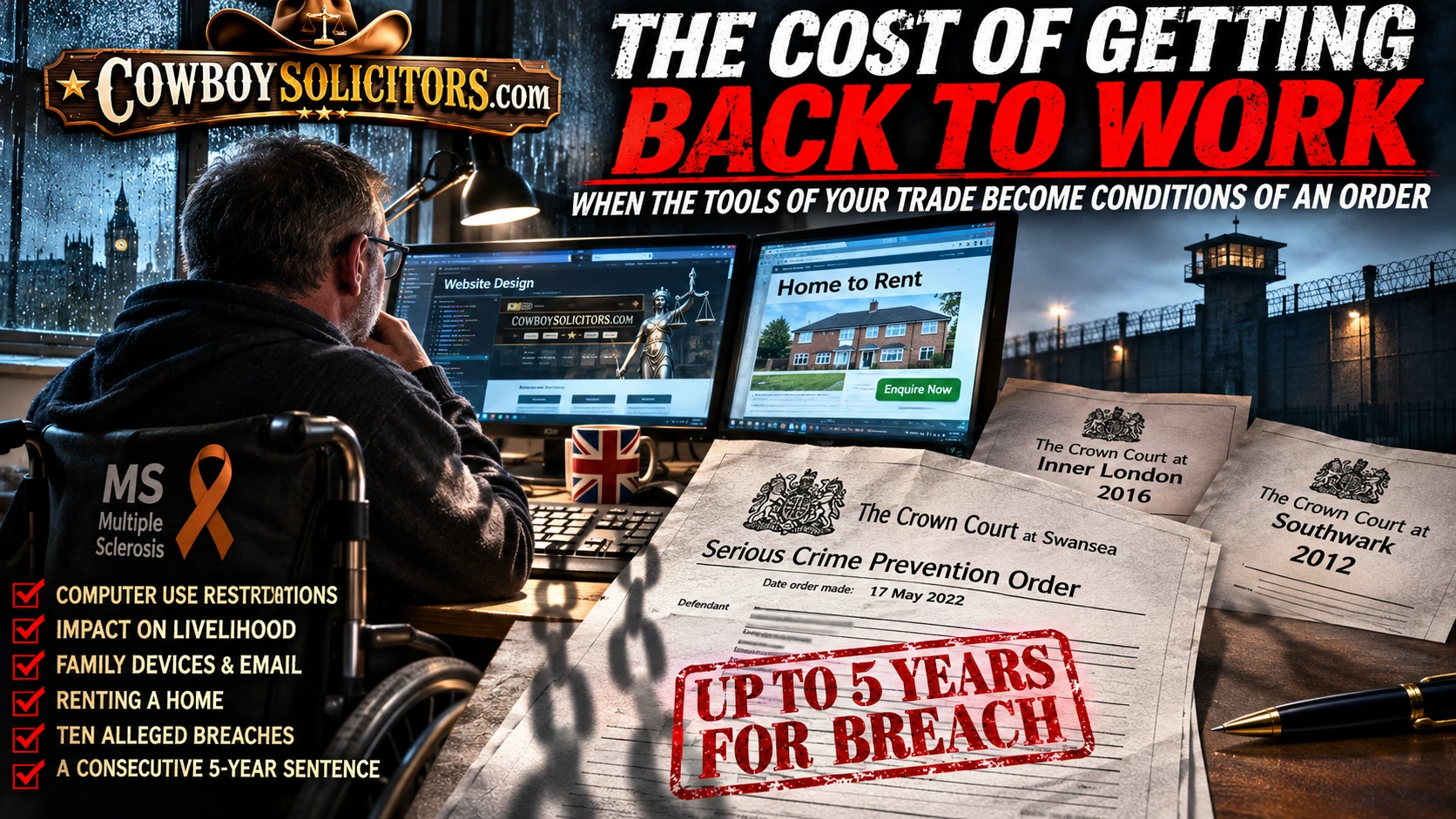
The laptop belonged to his wife and daughter. The email address was unregistered. What the writer said he was trying to do was rent a home. When he told the story in Inside Time on 1 April 2016, those details mattered because they had become part of a breach case.
Writing under the publication’s Inside Time Reports byline, he linked ten breaches to the rental and to creating CowboySolicitors.com. He described receiving a consecutive five-year sentence. Building websites was how he could earn a living with multiple sclerosis. To find housing or do paid work he needed the same things the order regulated: a device, an account and access to the internet.
The equipment on the desk
The Southwark papers reach beyond the computer itself. Alongside communication devices, internet devices and premises, the business provisions call for information about the nature of a business, the person’s role and the income he received or proposed to earn. A web designer starting a job could have several things to report before he opened a client’s site.
The dates place a limit on what the later papers can tell us. The Inner London order was made on 15 June 2016, more than two months after the article appeared. Its first page identifies an order made on 8 June 2014 as its predecessor. The June schedule deals expressly with an email account supplied by an employer. It cannot by itself establish which earlier conditions the writer was prosecuted for breaking.
In May 2022 the Swansea order still specified the equipment he could have. Page 3 lists a mobile handset, a computer for each place of work or residence, and a tablet, subject to conditions about monitoring software. Years later, his mother Grace described the other side of those obligations: the calls and emails the family kept so it could account for what had happened.
Read the three court orders
The dates are the dates printed on the court forms. The Swansea order identifies the June 2016 Inner London order as the one it replaces. These public copies mask the date of birth.